The digital landscape of 2026 bears little resemblance to the SEO world of even two years ago. We have moved past the era of “Search Engines” and entered the era of “Answer Engines.” With the full integration of Google’s AI Overviews (SGE), the rise of Perplexity as a research tool, and ChatGPT’s real-time web capabilities, the traditional “10 blue links” have been pushed further down the page.
For many bloggers, this shift has been catastrophic. Simple informational queries that once drove thousands of clicks are now being answered directly within the search interface. This is the reality of the “Zero-Click Search.”
However, as a professional who manages multiple high-traffic properties and a technical writing agency, I see this not as an end, but as a “Great Filter.” The AI era isn’t killing traffic; it is raising the barrier to entry. To survive, you must move from being a “content creator” to being a “Technical Content Architect.” This article will provide the blueprint for generating sustainable traffic despite the AI disruption.
What “AI Era” Really Means for Website Owners
To navigate this new era, we must first define the enemy. AI search isn’t just a new way to browse; it’s a new way to consume data. When a user asks a question, the AI model scrapes the top-ranking sites (like yours and mine), synthesizes that data, and presents a summary.
AI Answers Replacing Simple Search Queries
If your content is “thin”—meaning it only provides basic definitions or generic “how-to” steps—the AI will effectively “steal” your traffic. The user gets the answer they need without ever clicking through to your site. This has decimated niches that rely on simple factual data.
The Increase in Zero-Click Searches
In 2026, over 60% of mobile searches result in zero clicks. This means that even if you rank #1, you might not see the traffic volume you expect. The “Featured Snippet” has evolved into an “AI Narrative” that satisfies the user’s curiosity immediately.
Fewer Clicks for Generic Content
Google’s algorithms are now designed to distinguish between “Commodity Content” (content anyone can write) and “High-Gain Content” (content that provides new information). If your article reads like a rewritten version of Wikipedia, its visibility will continue to decline.
Trust and Authority: The New Currency
In a world flooded with AI-generated text, Trust is the only thing that cannot be automated. Users are becoming wary of anonymous advice. They want to know who is behind the words. This is where your personal brand and site history (like having a site on Mediavine or other ad networks) become your most powerful SEO assets.
My Experience: Scaling Through the AI Tsunami
As Al Jovayer Khandakar, I have spent years in the trenches of technical writing and high-level blogging. When I founded Agent Writing LTD, my goal was to provide content that didn’t just “rank,” but actually converted. This philosophy saved my portfolio when the first AI search updates rolled out.
I never treated my blogs as “passive income” sites; I treated them as technical resources. Because I am a Top-Rated Plus Technical Writer on Upwork, I applied the same rigor to my blogs as I did to my 5-figure client projects.
I stopped chasing “high volume, low competition” keywords and started chasing “High Authority, Technical Depth” topics. I realized that if I could provide a level of detail that an AI couldn’t summarize in two sentences—such as proprietary testing data or complex B2B workflow solutions—Google would have no choice but to send the user to my site for the full story. This experience-led approach is the backbone of the “Agent Writing” methodology.
Types of Traffic That Still Work in the AI Era
The era of “Google-only” dependency is over. If you want a Mediavine-level income in 2026, you must diversify. At Agent Writing, we focus on five specific pillars of traffic.
Evolution of Search Traffic
Search traffic isn’t dead, but it has shifted toward “Problem-Based” and “Nuance-Driven” queries. AI is great at facts but poor at strategy. We now target keywords where the user needs a deep-dive, such as technical comparisons or multi-step troubleshooting that requires human intuition.
The Power of Social Media Traffic
Social media is now a primary discovery engine. Platforms like LinkedIn, TikTok, and YouTube Shorts are where users find “experts” first. We use social media as a “Top of Funnel” tool to drive users to our long-form, Mediavine-monetized content.
Email Traffic: The Ultimate Insurance
Your email list is the only traffic source you truly own. In the AI era, an email newsletter is your protection against algorithm shifts. On my sites, email subscribers represent the highest-RPM (Revenue Per Mille) traffic because they trust the brand and stay on the page longer.
Community and Brand Traffic
Building a community (on Discord, Facebook Groups, or specialized forums) creates “Direct Traffic.” When people search for “Agent Writing” instead of “technical writing tips,” you have won. Brand traffic is immune to AI overviews because the user is looking specifically for your perspective.
Create Content That AI Can’t Replace (The Experience Framework)
This is the most critical section for any publisher in 2026. If an AI can write your post, the AI will replace your post. To get traffic, your content must have Information Gain.
Experience-Based Content
At Agent Writing, we define Experience-Based Content as anything that requires a human to have actually done the work. AI cannot go to a factory and inspect a machine; it cannot run a software beta test; it cannot feel the frustration of a failed business strategy.
When you write about a topic—for example, “How to Scale a Writing Agency”—you must include the “scars.” Talk about the specific month you almost went bankrupt, the exact hiring mistake that cost you $5,000, and the specific technical stack you use. This “human friction” is what readers crave.
In 2026, Google’s “Helpful Content” system looks for these “First-Person” signals. We use phrases like “In my experience at Agent Writing…” or “When I was auditing a Mediavine site last month, I found…”. These aren’t just words; they are structural signals that tell the search engine this content is unique. This is why a 2,000-word article filled with personal case studies and raw data will outrank a 5,000-word article written by an AI every single time.
Experience-based content also leads to higher “Time on Page.” When a reader realizes they are reading a real-world account rather than a synthesized summary, they slow down. They read every word. For a Mediavine publisher, this translates directly into higher ad impressions and a significantly higher RPM. You aren’t just providing an answer; you are providing a mentorship.
Create Content That AI Simply Cannot Replace
The biggest irony of the AI era is that the more “perfect” AI writing becomes, the more readers crave human “imperfection” and raw data. At Agent Writing, we have identified three content types that act as “AI-proof” anchors for our Mediavine sites.
Deep-Dive Technical Case Studies
AI can explain a concept, but it cannot execute a project. When we write a case study—for example, “How we audited a 50k session site for Core Web Vitals using Chrome DevTools”—we are providing a blueprint based on Proprietary Experience.
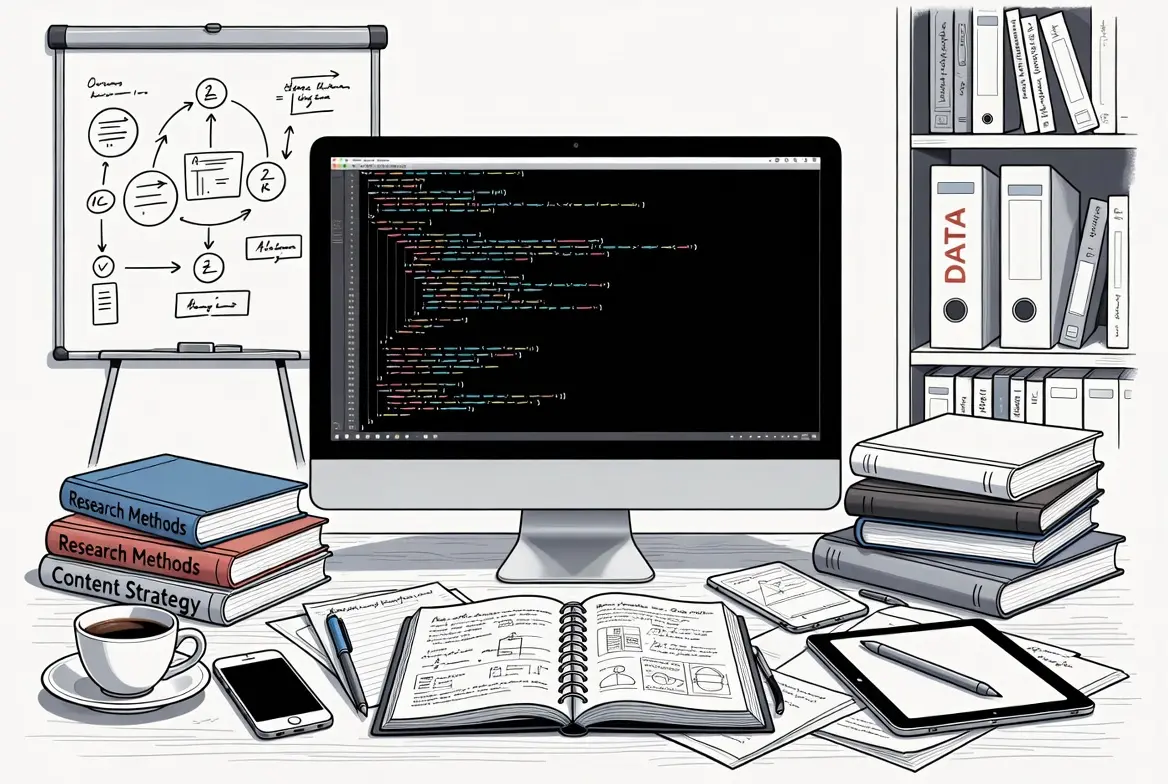
These articles often have lower search volume but an incredible 8–12% click-through rate from AI citations because they offer “proof of work” that generic AI summaries lack.
The Power of Opinion and Counter-Intuitive Thinking
AI is trained on the “average” of human thought. It is designed to be safe and agreeable. High-traffic blogs in 2026 win by being Provocative and Expert-Led. As an agency founder, I often publish “Counter-Trend” pieces—like why most “AI-optimized” content is actually hurting your long-term brand. People want to hear from the expert who has the guts to disagree with the status quo.
Original Data and Primary Research
The most “Citation-Worthy” content you can create is primary research. We frequently run our own tests—tracking how long it takes for a new post to get cited by ChatGPT vs. Google AI. By publishing these numbers, we create Data Equity. Other bloggers, journalists, and even AI models link back to us as the primary source. In 2026, being the “Source of Truth” is the only way to stay at the top of the funnel.
The Modern SEO Strategy: Dominating the Answer Engines
The traditional SEO playbook—find a keyword, check the volume, write 1,000 words—is obsolete. In 2026, Google’s AI Overviews and engines like Perplexity don’t just look for keywords; they look for Entities and Relationships.
To get traffic today, your site must be recognized as a definitive source for a specific topic. This is what we call “Answer Engine Optimization” (AEO).
Building Topical Authority Through Semantic Hubs
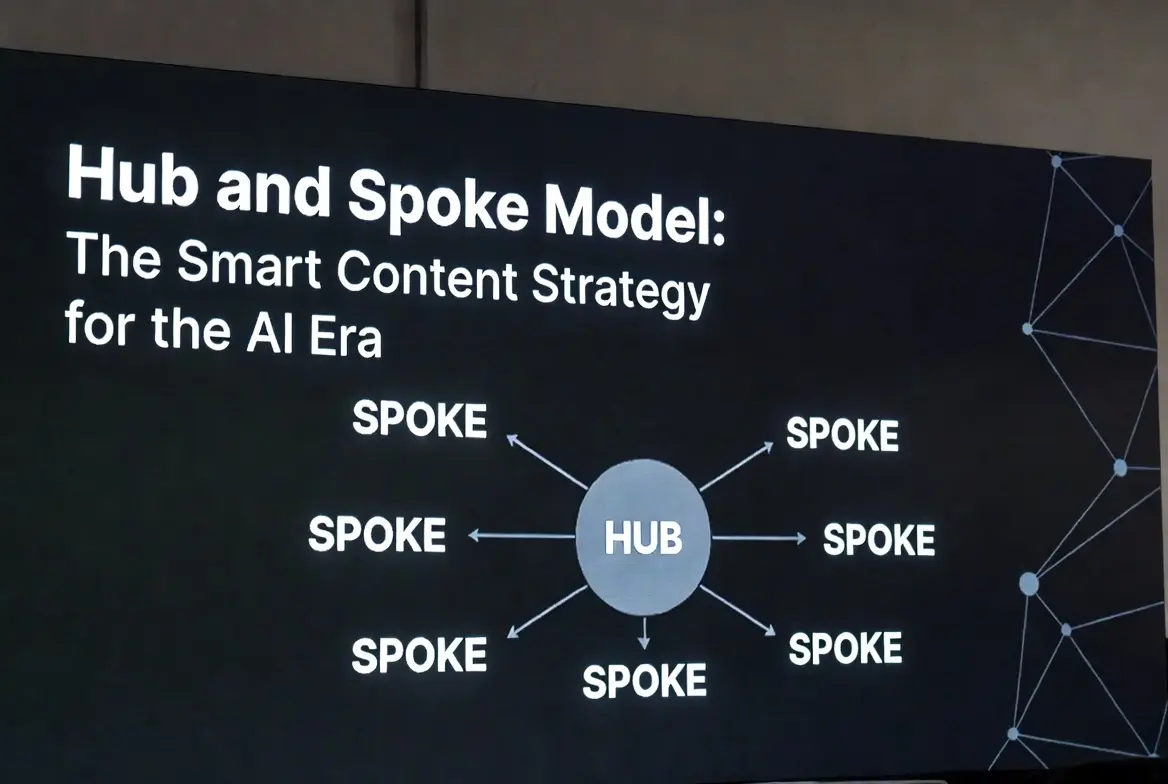
At Agent Writing, we no longer view a website as a collection of individual posts. Instead, we build Topical Hubs. Topical authority is earned when you cover every conceivable question related to a core subject.
For example, if you are an expert in “Technical Content Architecture,” you cannot just write one guide. You must write about the tools, the workflows, the hiring process for technical writers, the ROI of documentation, and the impact of AI on structured data.
When you create this “hub and spoke” model, search engines see that you aren’t just trying to rank for a keyword; you are trying to educate a user. In the 2026 landscape, this internal linking structure is the most powerful signal you have. It tells the AI that if it needs to cite a source for a complex query, your site provides the most context. We aim for at least 15–20 interconnected articles for every major category on a Mediavine-level site.
The Critical Role of E-E-A-T in AI Citations
E-E-A-T (Experience, Expertise, Authoritativeness, Trustworthiness) is the filter through which all content is now judged. In 2026, Google’s “Information Gain” score is a primary ranking factor. On my sites, I ensure every technical guide includes a “From the Field” section.
This might include a screenshot of a real-world error I encountered or a specific data point from an Agent Writing project. These unique “experience signals” are the reason our articles are frequently cited in the “Sources” section of Google AI Overviews. Being cited as a source in an AI answer is the new “Position Zero”—it builds the brand authority that drives Direct Traffic later.
Using AI to Accelerate Growth (Without Sacrificing Quality)
The most successful human publishers are those who use AI the most effectively. At Agent Writing, we use AI as a high-level research assistant and architectural partner to maintain a high output without compromising on technical depth.
AI-Driven Research and Information Architecture
Before we write a single word, we use specialized AI agents to perform a Content Gap Analysis. We feed the AI the top 10 results for a query and ask: “What is missing? What technical nuance are these articles ignoring?” The AI can scan thousands of words in seconds to find the “blind spots.”
We also use AI to help with Schema Markup and Structured Data. In 2026, your content must be “Machine-Readable.” By using AI to generate complex JSON-LD schema for our technical guides, we make it easier for search crawlers to understand exactly what our data represents. This technical “hand-holding” ensures that our complex charts and tables are correctly interpreted and displayed in rich snippets, significantly boosting our CTR.
Content Repurposing and Multi-Channel Scaling
The “Write Once, Publish Everywhere” (WOPE) strategy is the only way to stay competitive.
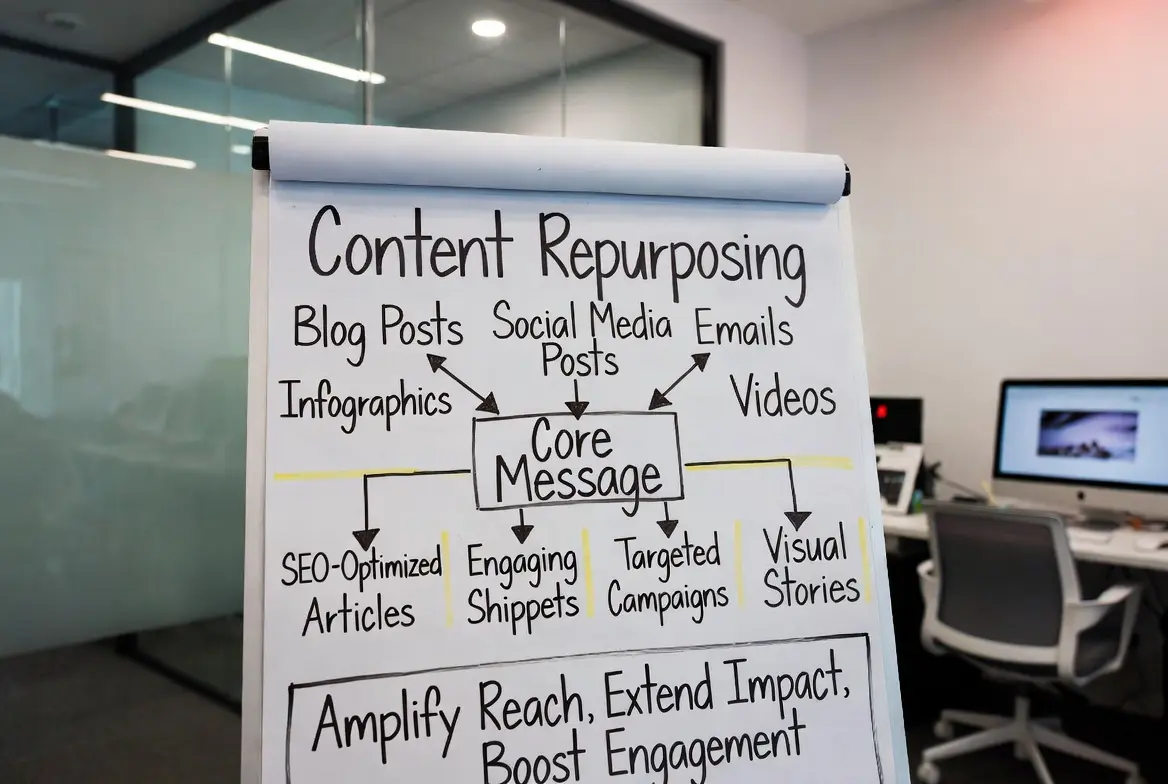
Once a high-quality technical article is published on our site, we use AI to break it down:
-
For LinkedIn: A 10-slide carousel summarizing the technical framework.
-
For YouTube Shorts: A script highlighting the “Three Mistakes to Avoid.”
-
For Newsletter: A “Behind the Scenes” look at why we wrote the article.
By using AI to handle the “formatting” of these assets, we save approximately 15 hours per week of manual labor. This multi-channel presence creates a “surround sound” effect. Even if a user doesn’t find us on Google, they see us on their social feed, which reinforces our brand authority.
Why Social Media is No Longer Optional for Publishers
There was a time when a blogger could ignore social media. That time is over. In 2026, social signals are a significant part of the “Trust” equation. If Google sees that your brand is being discussed on X (Twitter), LinkedIn, and Reddit, it assigns your domain a higher “Authority” score. Social media is Traffic Insurance.
Using Vertical Video as a Discovery Engine
Vertical video (TikTok, Reels, Shorts) has become the most powerful “Top of Funnel” tool for my blogs. We use these platforms to present “Micro-Solutions.” If I have a 3,000-word guide on “Scaling for Mediavine,” I will create a 45-second Reel explaining the “Traffic Threshold Secret.”
The goal isn’t to get 1 million views; the goal is to drive High-Intent Traffic. By placing a link to the full article in the bio, we convert passive scrollers into active readers. This traffic is “clean” and direct, which Mediavine and other premium ad networks love to see. It proves that your audience is loyal and follows you across platforms.
Email Marketing: The High-RPM Traffic Insurance
In the AI era, your email list is the only traffic source you truly “own.” If Google changes its algorithm tomorrow, your search traffic might drop, but your inbox access remains. For a Mediavine publisher, email traffic is gold because these users have higher Engagement Time, which drives up your Session RPM (Revenue Per Mille).
Transitioning from Broad Blasts to Behavioral Triggers
In 2026, nobody wants another “weekly digest” that looks like a wall of links. At Agent Writing, we use Segmented Behavioral Triggers. If a reader clicks on a technical guide about API Documentation, our system automatically tags them. The next email they receive isn’t a generic blog update; it’s a hyper-focused “deep-dive” into advanced API schema. This personalization ensures open rates stay above 40% even in a crowded market.
The Role of Zero-Party Data
With the death of third-party cookies, Zero-Party Data—information users willingly share with you—is the new oil. We use simple polls and surveys within our emails to ask: “What technical challenge are you facing today?” This data allows us to create content that we know will drive traffic before we even write the first draft.
Building a Brand, Not Just a Website
In 2026, search engines are moving toward Entity-Based SEO. They no longer rank just a URL; they rank a recognized brand. When users search for “Al Jovayer Khandakar” or “Agent Writing” directly, it tells Google that you are a trusted authority.
Branded traffic is the ultimate shield against AI disruption. If a user asks an AI, “How do I scale a writing agency?”, the AI might give a generic answer. But if they search for “Agent Writing scaling guide,” the search engine is forced to bypass the AI overview and deliver your specific site.
A brand is more than text. To maintain Mediavine-level authority, you must offer a Multimedia Experience. On my sites, we don’t just write 3,000 words; we embed custom charts, original infographics, and often a video walkthrough. This creates a “Sticky Brand” that users remember and return to, bypassing the search engine gatekeepers entirely.
Traffic Mistakes to Avoid in the AI Era
As I manage content for dozens of global clients, I see the same recurring mistakes that lead to traffic collapse. Avoiding these is just as important as implementing a new strategy.
-
Blind AI Dependency: Publishing 100% raw AI text without human verification leads to “Content Slop.” Google’s 2026 filters are incredibly efficient at detecting and de-indexing unedited AI fluff.
-
Ignoring Search Intent: Many bloggers still chase keywords without looking at the SERP. If the top results are videos and you’ve written a text-heavy essay, you are fighting a losing battle.
-
Relying on a Single Source: If 95% of your traffic is from Google Organic, your business is fragile. Diversify into Social, Email, and Direct traffic to stabilize your Mediavine earnings.
Practical Action Plan (Step-by-Step)
Week 1: The Authority Audit
-
Delete the “Dead Weight”: Use Search Console to find pages with zero traffic in 6 months. Delete or consolidate them.
-
E-E-A-T Check: Add a detailed author bio to every post. Link your Upwork Top-Rated Plus profile or LinkedIn to prove your credentials.
Week 2: Niche Depth and Hub Building
-
Pillar Content: Choose 3 core topics where you have absolute expertise.
-
Spoke Articles: Write 5 technical deep-dives for each pillar, focusing on “Information Gain” (data AI doesn’t have).
Week 3: The GEO (Generative Engine Optimization) Push
-
Schema Markup: Implement “Article,” “FAQ,” and “Person” schema.
-
Answer-First Formatting: Ensure every H2 section starts with a direct, concise answer to the heading’s question to win the “AI citation” spot.
Frequently Asked Questions
-
How many monthly sessions do I need for Mediavine in 2026? While the traditional threshold was 50,000 sessions, Mediavine now prioritizes Revenue Potential. Sites with high-quality technical niches and lower traffic can sometimes get in via the “Journey” program with as few as 10,000 sessions if the engagement is high.
-
Does AI content get penalized? Not for being AI-generated, but for being Low-Value. If it’s a generic rewrite, it will fail. If it’s AI-assisted but human-verified with original data, it can rank #1.
-
What is the best traffic source for RPM? Email and Direct traffic consistently provide the highest RPMs because the audience is “warm” and highly engaged with the ads.
Conclusion – Adapt or Disappear
The AI era is not a threat to the professional writer; it is a threat to the mediocre one. As Al Jovayer Khandakar, I have built my career on the principle that Quality is the only sustainable SEO strategy. If you treat your blog as a technical portfolio—a place where your unique experience at Agent Writing is on display—you will find that 2026 is your most profitable year yet.