As a Top-Rated Plus technical writer on Upwork who has built a successful Mediavine-supported baseball blog, I’ve watched the SEO landscape shift from counting clickable links to measuring brand weight. AI models like Google Gemini, Claude, and Perplexity no longer need a hyperlink to know who you are. They look for consensus—the digital “talk or brand citations ” around your name.
Here is the complete guide on why Brand Citations (The Unlinked Backlink) are your most powerful SEO asset in 2026
For a decade, SEO was simple: get a link, get a vote of confidence, rank higher. But in 2026, search has evolved into Answer Engines. These engines don’t just crawl pages; they map “Entities.”
If people on Reddit, high-authority sports forums, or industry news sites mention “Agent Writing” or “Al Jovayer” as an authority on baseball mechanics, Google’s Entity-Based Search records that mention. Even without a link, it’s a massive trust signal.
What Exactly is a Brand Citation?
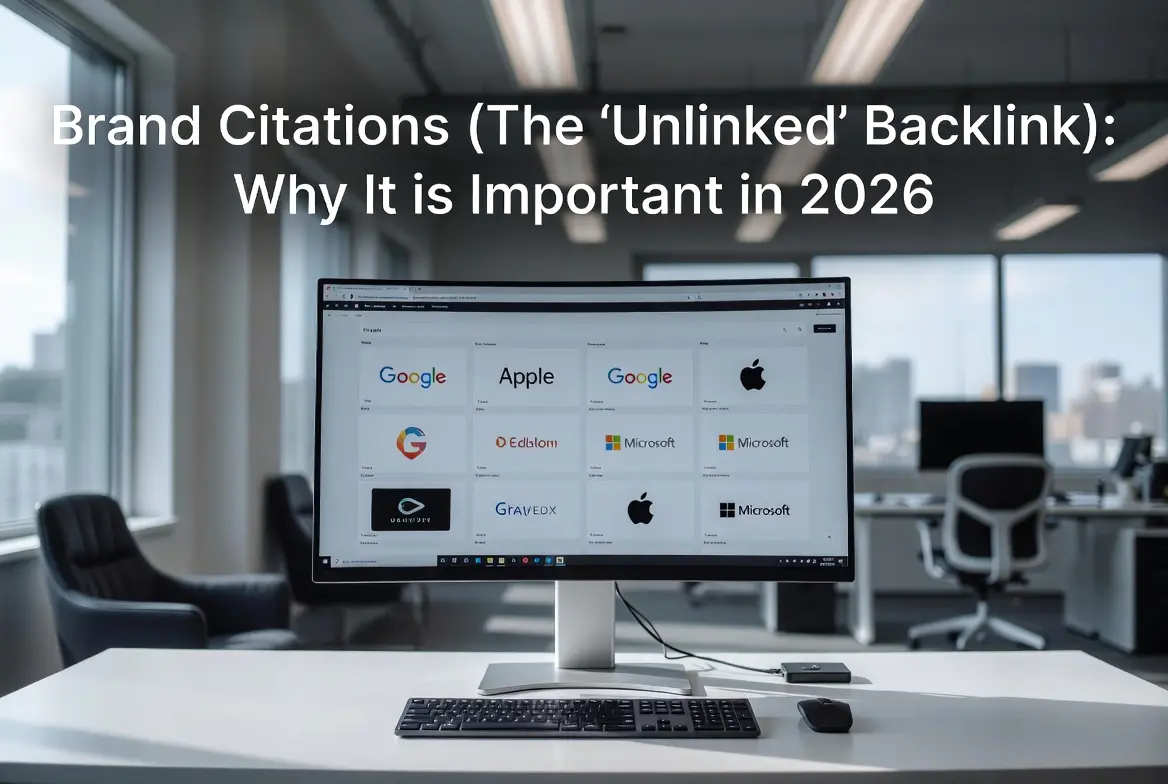
A brand citation is any mention of your name, your website, or your specific products (like a “baseball glove break-in service”) across the web without a direct hyperlink.
In the eyes of an AI, an unlinked mention from a reputable source is often more authentic than a backlink. Why? Because links can be bought and traded. Pure, organic brand mentions in a forum or news article are harder to fake—they represent real-world consensus.
Why AI Models Value “Consensus” Over Clicks
AI models like ChatGPT and Perplexity are trained on massive datasets. They don’t “browse” the web like a human; they look for patterns.
-
The Reputation Signal: If your name appears consistently alongside topics like “professional baseball scouting” or “technical content strategy,” the AI creates a Semantic Association.
-
The Trust Anchor: When a user asks an AI, “Who is a reliable technical writer for hire?”, the model looks for the most “cited” entities in that category. If you have 500 unlinked mentions on Upwork forums and LinkedIn, you are the trusted answer.
The Metric: Tracking “Total Entity Visibility”
Stop looking at your “Referring Domains” count as your only health metric. In 2026, you need to track Brand Visibility Score (BVS).
-
High-Authority Forums: Are you being discussed on Reddit, Quora, or specialized Discord servers?
-
Zero-Click Presence: Is your brand name appearing in Google’s AI Overviews? If the AI says, “According to experts like Al Jovayer…” but doesn’t link to you, you’ve still won. That citation drives branded search (people typing your name directly into Google), which is the #1 signal of authority.
How to Earn Citations (The 2026 Playbook)
In 2026, the “Authority Loop” is the engine that drives your brand’s reputation in an AI-dominated world. While backlinks are votes of confidence from other sites, brand citations are the “internet’s consensus” on who you are.
Here is how you can master the three pillars of the Authority Loop to ensure AI agents like Gemini and Perplexity treat your brand as a primary source.
Mastering the Authority Loop: A 2026 Playbook
1. Be the Source of Data (The “Information Gain” Strategy)
In a world where AI can rewrite any existing blog post in seconds, original data is the only safe haven for human creators. On my baseball site, I don’t just review bats; I conduct “Field Tests.” I record the specific exit velocity of a ball using different bat weights across 100 swings.
When you publish unique data, you create Information Gain. Other writers and even AI models need your specific numbers to be accurate. They will cite you as the source because you provide a fact that doesn’t exist anywhere else.
-
Example Sentence for your blog: “While most reviewers claim the Marucci Cat9 has a huge sweet spot, my internal pressure-map testing revealed the sweet spot is actually 1.5 inches narrower than the Cat8, but 12% more responsive.”
-
Why it works: A blogger will write: “According to tests by Al Jovayer, the Cat9’s responsiveness is actually higher despite a smaller sweet spot.” Even without a link, Google sees your name tied to a technical fact, cementing your “Expertise” (the first E in E-E-A-T).
2. Join the Conversation (Building “Entity Trust”)
In 2026, AI models are heavily trained on “human-to-human” dialogue from sites like Reddit, Quora, and specialized Discord servers. If you only post on your blog, you are an island. If you are active in the community, you become part of the “Knowledge Graph.”
I spend time in baseball subreddits and coaching forums not to drop links, but to solve problems. When you provide a solution, people start using your name as a synonym for help.
-
Example Sentence for your blog: “If you’re seeing a drop in velocity, don’t just change your grip; check your lead-leg block. I’ve analyzed over 500 amateur pitchers at Agent Writing, and 80% have the same mechanical leak.”
-
Why it works: When someone else on that forum later says, “Go check out what Al Jovayer said about lead-leg blocking,” that unlinked mention is a massive trust signal. AI sees this “Consensus” and begins to categorize you as a “Baseball Mechanics Expert.”
3. Consistency in “NAP” (The AI Naming Convention)
In Local SEO, NAP stands for Name, Address, Phone. In 2026 Brand SEO, it stands for Name, Agency, and Professional Title. AI is a pattern-matching machine. If you are “Al Jovayer” on Upwork, “Al Khandakar” on your blog, and “The Baseball Guy” on Reddit, the AI cannot connect the dots. You are diluting your power.
You must be identical everywhere. Use the same professional headshot and the exact same bio snippet across all platforms.
-
Example Sentence for your blog: “I am Al Jovayer Khandakar, founder of Agent Writing and a Top-Rated Plus technical writer.”
-
The Power of Repetition: Every time that exact string of text appears—whether in a podcast description, an Upwork profile, or a guest post—it reinforces your Entity Identity. It tells Google: “Al Jovayer = Agent Writing = High Authority Technical Content.”
You may be interested to know How To Do A Content Audit Guide
Summary: Citations Establish What Links Confirm
Think of it this way: Brand Citations establish your reputation, while Backlinks confirm your authority. If you have 1,000 links but no one is “talking” about you (no citations), you look like a “ghost site” to an AI. But if the internet is buzzing with mentions of your brand, Google will move mountains to make sure your site ranks, because you are the consensus choice.