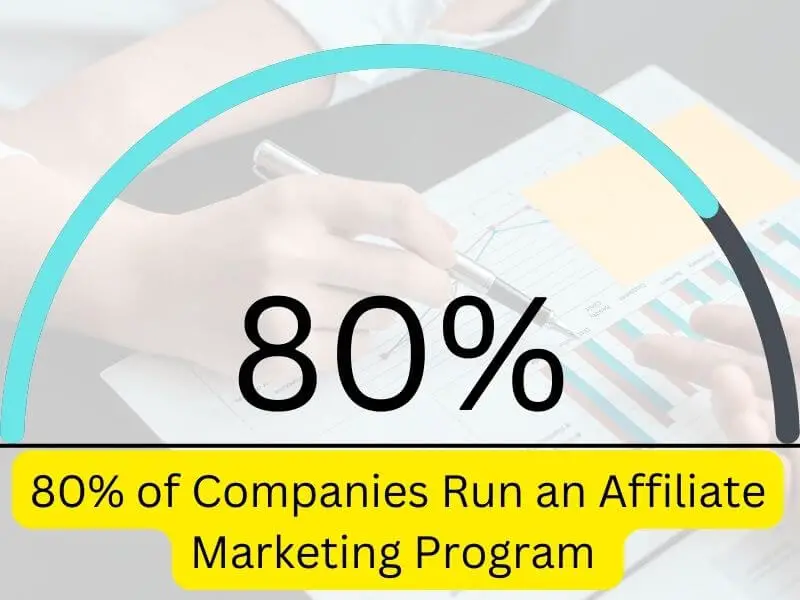
The affiliate market is surging, hitting a global value of $22.5 billion in 2026. While over 84% of brands now offer affiliate programs, the “AI-generated” era has completely changed the rules for niche selection.
In 2026, you can’t just pick a broad topic and hope for traffic. To survive Google’s AI Overviews and satisfy the latest E-E-A-T (Experience, Expertise, Authoritativeness, and Trustworthiness) requirements, you need a micro-niche built on human experience.
As a Top-Rated Plus writer and founder of a Mediavine-supported sports blog, I’ve moved beyond outdated 2022 advice. In this guide, I’ll show you the exact framework I use to vet niches that are profitable, AI-proof, and sustainable for the long haul.
The 2026 Niche Selection Pivot
-
Search Intent: Can an AI answer this in a single paragraph? If yes, skip it.
-
Product Nuance: Does the buyer need to see “hands-on” proof to trust the review?
-
Revenue Potential: Are there high-ticket private programs beyond just Amazon?
What will You Get From This Guide to Niche Affiliate Marketing?
We have been in the writing and SEO industry for more than five years. We have worked for many affiliate programs and established our own affiliate websites. Even with our vast experience, it was not easy for us to choose a niche because there are many options, and you can not blindly pick a product and start promoting it.
Many experts say that you do affiliate marketing for a product you have a passion for. We agree with that also. But don’t take those words too seriously.
Because the product you are passionate about may not attract many people. In that case, you will not get profit for your effort. At the end of the day, you are doing niche affiliate marketing for money, right?
So, you have to bridge between your “passion” and “what people are looking for.” That’s exactly what this guide will try to do. Here we will discuss niches for affiliate marketing, establish a niche site project, and do niche research for affiliate marketing. Grab a cup of coffee and stay with us because this article can take you to your destination of earning money sitting at your home.
What is a Niche in Affiliate Marketing?
Affiliate marketing is a business model where an individual or company pays an affiliate commission to promote a product or service. When someone clicks on the affiliate’s link and purchases the product or service, the affiliate earns a commission.
Niche affiliate marketing is a way to make money by promoting other people’s products. The main idea behind this type of affiliate marketing is that you promote products that your target audience is interested in.
This is a very effective way to make money because you are able to attract the kind of customers who have a specific interest in the products that you are promoting. When you have a niche, you can often find many people looking for the products you are promoting.
If you can find a niche with a lot of people looking for products like the ones you are promoting, you will have a lot of success with this type of affiliate marketing.
There are many different niches in affiliate marketing, and the best way to find a niche is to think about what you are passionate about, what you know a lot about, and what is profitable. Once you have identified a niche, you need to do some research to see what products or services are available in that niche.
Once you have found a few products or services that fit your niche, you need to decide which ones to promote. You can promote all of the products or services you have chosen, or you can choose to promote only a few.
We should mention that a website is not the only way to do affiliate marketing. You can do that with a YouTube channel or even social media pages. But a website is the easiest and most effective way to do affiliate marketing, And you can use other channels such as YouTube or Social media to support your niche site project.
Who Can Be an Affiliate Marketer?
Literally anybody with writing, research skill, and a vision to understand the business. You don’t have to be a master of the topic for the niche you will write. But you have to understand how to write SEO articles. Moreover, you should understand what keywords are and how to do keyword research, as that will help you to do niche research for your affiliate marketing.
Understanding how to write a product review is another thing you should know to be a successful affiliate marketer.
Don’t be overwhelmed reading about all of these skills. You don’t have to be a master of everything we mentioned. Actually, nobody can do that either.
You can always hire experts to help you. For example, for content writing, you can hire a freelance writer. But to be successful in your niche affiliate project we will highly recommend hiring a content writing service.
But you should know the basics because it’s never a good idea to dive into a business without learning the basics. How will you measure the SEO person you hired is not that skilled? How will you measure the content you are publishing is not well SEO optimized or not following Google’s latest helpful content update?
That’s why you need to learn the basics. And if you have the basics, you can be a niche affiliate marketer. And when you have those, we have some important tips for you:
1. Create a strong website. Your website is the first place potential customers will see your affiliate marketing promotion. Make sure your website is professional and easy to navigate. Include a contact form and a home page that features your affiliate marketing products and services.
2. Understand online marketing. Affiliate marketing is all about promoting products and services online. As an affiliate marketer, you need to understand online marketing principles well. This includes understanding how to create effective online ads, measuring the success of your online campaigns, and creating compelling content that will draw in online shoppers.
3. Promote your products and services effectively. As an affiliate marketer, your goal is to convert online shoppers into customers. To do this, you need to promote your products and services in an effective way. This means creating online ads that are targeted and persuasive and creating content that is interesting and engaging.
4. Have the financial resources to start and maintain an affiliate marketing business. Affiliate marketing is a high-volume business. Having the financial resources to start and maintain an affiliate marketing business is important. This includes having a good marketing strategy, a website that’s optimized for search engine optimization, and a large affiliate marketing inventory.
The Benefits of Affiliate Marketing
The current market size of affiliate marketing is 15 billion, and Google trends show that it will rise in the future at a fast pace.
But why is this market growing so rapidly?
- The best part about affiliate marketing is that it is an easy way to make money. You can start affiliate marketing by promoting a product or service that you believe in. Once you have built a following, you can start earning commissions on your followers’ sales.
- There are many different affiliate marketing platforms available, so you can find the one that fits your style of marketing best. Some of the most popular affiliate marketing platforms include Google Adsense, Clickbank, and Amazon Associates.
- If you are new to the world of affiliate marketing, there are many resources available to help you get started. The best way to find these resources is to search for online forums and groups that focus on affiliate marketing. There are many ways to make money through affiliate marketing, so there is sure to be a method that fits your needs and interests.
- Affiliate marketing is a great way to make a living online. Affiliate marketing has many benefits, including the ability to make a living from your home, the freedom to work from anywhere, and the opportunity to work with a wide range of brands.
What are the Attractive Criteria for a Good Niche? (2026 Edition)
It’s time to get your hands dirty. Ready to start your niche affiliate project? Before you buy that domain, we need to stress-test your idea against the modern search landscape. As a Top-Rated Plus writer and someone who has successfully scaled a sports blog to Mediavine, I’ve refined the classic criteria into five “survival” factors.
1. Strategic Intent Over Raw Search Volume
In 2022, we chased big numbers. In 2026, we chase “Zero-Click Resistance.” While Google still dominates search, their AI Overviews now answer general “What is…” questions instantly.
-
The New Rule: Don’t just look for high volume; look for Commercial Intent. If a keyword has 10,000 searches but is purely informational (e.g., “History of Baseball”), you will get zero clicks.
-
The Goal: Focus on niches where volume is concentrated in “Which to buy?” and “Problem-solving” queries. You want users who are ready to open their wallets, not just users who are curious.
2. High-Touch Product Complexity
Monopoly is still bad, but Simplicity is now worse. If a product is simple (like a USB cable or a toaster), an AI can summarize the reviews perfectly.
-
The New Rule: Choose a niche with High-Touch or Technical products.
-
The Case Study: If you’re reviewing laptops or baseball bats, there are infinite variables—weight distribution, software lag, tactile feel, and durability over time. These require a human “Field Test.”
-
The Goal: Pick a niche where a “Decent Product Collection” means products that have nuance. If a product needs to be held, swung, or tested in the rain to be understood, it is an AI-proof niche.
3. Diversified & “High-Ticket” Affiliate Programs
Amazon used to be the pivot point, but in 2026, relying solely on Amazon is a risk. Their commission rates are often too low to support a professional team.
-
The New Rule: Seek out Private Affiliate Programs or SaaS-heavy niches. Platforms like Impact, CJ (Commission Junction), and ShareASale often host brands willing to pay 10%–30% compared to Amazon’s 3%.
-
The Al Jovayer Strategy: I look for brands that offer “Direct Contracts.” Because of my site’s authority, I often negotiate higher rates. When vetting a niche, check if the top brands have an “Affiliate” link in their footer. If they do, you have a path to higher margins.
4. The “Experience Trifecta”: Passion, Profit, and Proof
The old advice was “Passion or Profit.” In 2026, you need all three: Passion, Profit, and Proof.
-
Passion: You need to stick with it for 12+ months.
-
Profit: The search intent must be transactional.
-
Proof (Experience): Can you provide original photos, videos, and “behind-the-scenes” data? If you aren’t passionate enough to actually use the products, you won’t be able to generate the “Experience” signals Google demands.
Note: If you have the passion and profit but lack the time to write, this is where my agency, Agent Writing, comes in. We match you with writers who have the Proof—actual experts who use the gear while we handle the SEO.
5. Information Gain Competition (The New “Low Competition”)
“Low competition” no longer means “sites with low Domain Rating.” It means “low Information Gain.”
-
The New Rule: Look for niches where the current top-ranking articles are all saying the exact same thing. This is a massive opportunity.
-
The Workflow: If the top 5 results for “Best Baseball Catcher’s Mitt” are all generic listicles using stock photos, that is Low Information Gain Competition. Even if they are big sites, you can beat them by publishing a 4K video of you actually catching 90mph fastballs with those mitts.
-
The Goal: Don’t look for “weak” sites; look for “lazy” content.
The AI Trap: Why “Informational” Niches are Dying in 2026
When I first started in this industry, the goal was simple: find a keyword like “History of the Baseball Bat” or “How to Hold a Curveball,” write a 2,000-word article, and watch the traffic roll in. In 2026, that strategy is a ghost town.
What is AI-Commoditized Content?
AI-Commoditized Content refers to any information that a Large Language Model (like Gemini or ChatGPT) has already “memorised.” If the answer to a user’s query exists in a textbook, a manual, or a Wikipedia page, Google’s AI Overview (AIO) will simply display the full answer at the top of the search results.
The Trap: If you pick a niche that is purely informational, you are fighting a losing battle. The user gets their answer in 5 seconds without ever clicking your link. You pay for the hosting and the content; Google’s AI gets the credit. This is why “General Information” niches have seen a 70% drop in click-through rates (CTR) over the last two years.
The “Google-Proof” Niche: Transactional + Experiential
To build a successful affiliate site in 2026, you must pivot. You need to target queries where the user isn’t just looking for a “fact,” but for a recommendation based on human trial and error.
The solution lies in merging two specific types of content:
1. The Transactional Layer (“Which should I buy?”)
AI is excellent at listing specs, but it is terrible at subjective comparison. * The AI Answer: “The Marucci Cat9 is made of AZR alloy.” where The Human (Experiential) Answer: “While the Cat9 has great alloy, I found that the vibration on miss-hits felt significantly sharper in the hands than the newer BBCOR models during my cage sessions last Tuesday.”
In 2026, your niche must be product-heavy. You want to be in the middle of a purchase decision where the “specs” on the box don’t tell the whole story.
2. The Experiential Layer (“How do I fix this specific, nuanced problem?”)
AI can give you a recipe, but it can’t tell you why your specific oven at 5,000 feet of altitude is burning the edges. In my baseball niche, I don’t write about “How to Break in a Glove.” Instead, I write: “I tried the ‘Hot Water’ method on three different A2000 gloves—here is why the blonde leather reacted differently than the black leather.”
How to Vette Your Niche for “AI-Resistance”
Before you buy a domain name, run your niche idea through the Al Jovayer “Trap Test”:
A. The “I vs. It” Test
Take your top 10 potential keywords and type them into an AI.
-
If the AI answers with “It is…” (e.g., “It is important to stay hydrated”), the niche is commoditized.
-
If the answer requires “I…” (e.g., “I tested these three hydration salts during a 10k run in 90-degree heat”), the niche is safe. You want a niche that demands the “I” perspective.
B. The “Tactile Gap”
Does the niche involve products that have a “feel,” a “smell,” or a “sound”?
-
Safe Niches: Mechanical keyboards, baseball bats, high-end audio, hiking boots, specialized power tools.
-
Trap Niches: Digital software subscriptions (SaaS), basic household consumables, historical facts, public data. AI cannot “feel” the tension of a tennis string or “smell” the notes of a niche fragrance. These are the “Tactile Gaps” where humans still reign supreme.
C. The “Edge Case” Factor
In 2026, the “average” user is served by AI. The “expert” or “enthusiast” user is served by you. Pick a niche where there are infinite “Edge Cases.”
-
Example: Instead of “Best Running Shoes,” go for “Best Running Shoes for Overpronators with Narrow Heels on Technical Trails.” The more specific the problem, the more the user will distrust a generic AI answer and seek out your personal experience.
Why Personal Nuance is Your Only Currency
As a Top-Rated Plus technical writer, I have seen hundreds of clients try to use AI to build affiliate sites. They almost always fail because they lack Information Gain.
Google’s 2025 algorithms explicitly look for “Information Gain”—the presence of new, unique information that isn’t found elsewhere in the index. When I audit my baseball site, I ensure every article has a “Personal Nuance” section.
Example of Nuance over Information:
-
Information: “This bat is 33 inches long.” (AI knows this).
-
Nuance: “Because of the end-loaded swing weight, this 33-inch bat actually feels heavier through the zone than a standard 34-inch balanced bat. I struggled to get my hands around on fastballs over 90mph with this specific model.” (Only a human knows this).
Actionable Tip for Your Niche Selection:
If you are currently looking at a niche, ask yourself: “Can I produce a 60-second video proving I have used this product?” If the answer is no, you are likely in an “AI Trap” niche. In 2026, the search engine and the audience both demand the “receipts” of your experience. Don’t build a library of facts; build a record of experiences.
Some Major Mistakes As a New Blogger
i. Targetting Big Niche
New niche affiliate marketers should never target a larger niche unless they have a huge amount of investment. Even it will take a huge time and effort with a huge investment if you target a larger niche. There are many reasons why you should not target a larger niche.
First, This is because there are a greater number of competing affiliate programs and products in a larger niche, making it harder for affiliates to find worthwhile promotional offers.
Second, generating traffic to your affiliate program in a larger niche may be more difficult. Because there will be more authority websites, it will be very hard for you to beat them for a new website.
And lastly, you will need to produce a huge amount of content. You will need multiple SEO experts, tons of writers, and editors, and all of these can go in vain. This will be very hard for you to get your investment back.
Instead, you can start with a small section of a niche(which we call a micro niche). After you cover everything and obtain good authority, you can target another product related to that niche. Thus you can increase your website.
The large websites with a broader niche that you see online started like this. Nobody starts with a huge niche because that is too risky and too difficult to rank.
Targeting the wrong keywords is like trying to sell snow to people in the Arctic. Even if you have the best “product,” you’re talking to the wrong crowd.
-
Wasted Energy: You spend weeks writing the “perfect” article, but if the keyword has Zero Intent (people just want a quick fact, not to buy something), you get traffic but no commissions.
-
Invisibility: If you target keywords that are too broad (like “Baseball”), you will be buried under giant sites like ESPN. Your potential customers will never even see your link.
-
The AI Dead-End: In 2026, if you target “What is” keywords, Google’s AI will answer it for the user on the search page. If they don’t click, you don’t earn.
ii. Choosing the Right Keywords
In 2026, keyword research isn’t just a “task” on your to-do list—it is the foundation of your digital survival. If you target the wrong keywords, you aren’t just wasting time; you are essentially building a store on a road that no one travels.
Here is a simplified, modern breakdown of how to choose keywords that actually put money in your pocket.
The 2026 Strategy: Move Beyond the Tools
While tools like Ahrefs or Semrush are helpful, they only tell half the story. In 2026, “hidden gems” are found where the tools can’t look. To find the right keywords, follow these three simple steps:
a. Use the “Google Search Bar” Secrets
Don’t just look at search volume. Type your idea into Google and look at:
-
Autocomplete: The sentences Google finishes for you are what real people are typing right now.
-
People Also Ask: These are the specific “pain points” users have.
-
Related Searches: Scroll to the bottom of the page to see the “next steps” in a buyer’s journey.
b. Hunt for “Zero Volume” High-Intent Keywords
Many tools will say a keyword has “0 monthly searches.” Don’t believe them. In 2026, highly specific “long-tail” keywords (like “Best left-handed catcher’s mitt for 10-year-olds”) are gold mines. They may only get 10 searches a month, but 9 out of 10 of those people are ready to buy immediately.
c. Check for “Forum Buzz”
Go to Reddit or Quora. Look for questions that keep popping up. If people are asking a specific question on a forum, it means the current articles on Google aren’t answering it well enough. That is your “Green Light” to write.
Simple Keyword Examples for 2026
iii. Writing more Money Content than informative content
This is another mistake many new affiliate marketers make. Remember, people will only buy products from you when you can earn their faith. If you can not earn their faith, they will not buy the products you recommend.
So, how to earn faith? The easiest way is to by solving their problems. Write “How to Guides” and answer other problems they are facing. Of course, the problem should be related to your niche.
For example, you have a website where you write reviews on sunglasses. So, you should write informative articles on how to clean sunglasses, how to store sunglasses, how to fix broken sunglasses, etc.
The standard ratio of review content and informative content should be 70:30.
iv. Picking a wrong hosting solution
When it comes to affiliate marketing, one of the most important aspects that you need to consider is where your website will be hosted. Affiliate marketing can be time-consuming and frustrating if your website is not hosted properly.
Bad hosting can affect the traffic and security of your website. In the worst-case scenario, your website can be hacked. So, always pick a reputed company and buy hosting with good resources to handle your website and incoming traffics.
v. A website with a bad user experience
User experience is a very important SEO factor. For example, if your website won’t load in under 1 second, that will be considered a bad user experience. Only hosting and a good theme (considering you are using WordPress) are not sufficient for fast loading. We will recommend the WpRocket plugin, and it magically improves your website’s speed. And for theme selection, you can read our blog on how to choose a theme.
A Few Tips for Optimizing a Niche Website
If you are a complete beginner, you should follow the below instructions:
Greater Depth
Google will only rank your website higher when you cover a topic deeply. Writing some about this topic and some about that topic is never a good idea. Google will also become confused.
So, after picking your niche, write about a single topic and go as deep as you can. Thus you will be able to establish yourself as an expert on that topic. And if you can do so, both Google and readers will put trust in you.
Content for readers, not for search engine
Currently, Google is facing huge trouble with its advertising policies. Because people are using AI tools to write content, using different SEO tactics to optimize, and many times people are not getting satisfaction with the search results. That’s why Google published a huge update in September 2022 for content updates.
Google specified that they would only rank those articles written for humans, not search engines. Therefore, you should avoid keyword stuffing and any other black hat SEO tactics because Google will find out that, and eventually, you will be penalized.
So, following the white Hat SEO tactics is safe and writing for humans first.
Engagement with readers
Engagement improves your credibility as a writer. It’s always good to have an engagement with your readers. You can do that in the comment section of your blogs. Also, use your social media pages to interact with your readers.
10 Top Niches for Affiliate Marketing 2026
In 2026, the “Golden Age” of broad niche blogging is over. You should not choose a niche where you not only fight with other bloggers but also will fight with AI like ChatGPT or Gemini.
To win in the modern affiliate landscape, you must choose a Micro-Niche. You need to find “sub-entities” where human experience is the primary selling point. As I have a own website on Mediavine and I in interested in research and analysis, I have analysed more than 500 websites of Mediavine and other ad platforms. I have found that some niches, like food and health, are still well-performing niches.
Here are 10 high-authority, micro-niche suggestions for 2026 that are designed to be “AI-Proof” and high-revenue.
1. Sustainable Personal Tech (Beyond Just “Electronics”)
In 2026, the tech market has split. People are tired of “disposable” gadgets. There is a massive, high-intent audience looking for Sustainable Tech—products built to last, repair, and thrive off-grid.
-
The Focus: Right-to-repair laptops (like Framework), refurbished luxury smartphones, and portable solar ecosystems.
-
Why it works: AI can’t tell you how easy it actually is to swap a battery in a specific laptop model. You can.
-
Affiliate Opportunity: High-ticket solar generators (EcoFlow, Jackery) and specialized repair toolsets (iFixit).
2. Bio-Hacking for Longevity (The Evolution of “Health”)
General health advice is a commodity. “Bio-hacking” is a lifestyle choice for people with high disposable income. In 2026, people don’t just want to be “healthy”; they want to live to 120.
-
The Focus: Wearable glucose monitors, red-light therapy panels, and personalized “stack” supplement subscriptions.
-
Why it works: This is a deeply personal niche. Your “30-Day Red Light Therapy Log” is a piece of Experiential Content that an AI cannot simulate.
-
Affiliate Opportunity: Smart rings (Oura), PEMF mats, and high-margin subscription supplements.
3. Local “Adventure” Overlanding (The New “Travel”)
Broad travel blogs are being decimated by AI trip planners. However, AI cannot tell a traveler that the bridge on “Old Creek Road” in Montana is currently under six inches of water.
-
The Focus: Regional “Overlanding” (truck camping) and Van Life. Focus on specific US territories (e.g., “The Ozarks” or “Pacific Northwest”).
-
Why it works: It requires Ground-Truth Data. You are providing the “un-Googleable” details about trail conditions and hidden campsites.
-
Affiliate Opportunity: Rooftop tents, 12V portable fridges, and heavy-duty off-road recovery gear.
4. AI-Enhanced Productivity Workflows (Niche Specific)
General AI news is everywhere. What’s missing is the “How-To” for professionals. In 2026, architects, lawyers, and engineers are desperately looking for the right AI tools for their specific day-to-day tasks.
-
The Focus: “AI for Architects” or “AI-Driven Workflows for Solo-Lawyers.”
-
Why it works: You aren’t just reviewing software; you are selling a result. If you can show an architect how to save 10 hours a week using a specific AI plugin, they will buy whatever you recommend.
-
Affiliate Opportunity: Specialized SaaS subscriptions and high-end hardware (like GPUs or AI-specific keyboards).
5. Technical Sports Performance (Case Study: Baseball)
Let’s look at my own niche: Baseball. In 2026, I don’t just review bats. Every parent on the planet can find a bat review. Instead, I focus on Technical Performance.
-
The Focus: Swing-tracking sensors (Blast Motion), VR training modules (WIN Reality), and weighted ball programs (Driveline).
-
Why it works: On my baseball site, I combine my Top-Rated Plus writing skills with actual data. I show the chart of how a sensor improved a player’s exit velocity. This is “Information Gain” that search engines crave.
-
Affiliate Opportunity: High-end sensors, VR headsets, and subscription-based coaching apps.
6. Regenerative Urban Gardening (The New “Home & Garden”)
The “Home & Garden” niche is too broad. “Regenerative Urban Gardening” focuses on people trying to turn small city spaces into self-sustaining ecosystems.
-
The Focus: Hydroponic “Tower Gardens,” mushroom cultivation kits, and compost-acceleration tech.
-
Why it works: It’s a “hands-in-the-dirt” niche. AI doesn’t know why your specific brand of hydroponic nutrients caused a pH spike in a small apartment setting.
-
Affiliate Opportunity: Vertical garden kits, smart composters (Lomi), and heirloom seed subscriptions.
7. Personal Cyber-Security & Data Privacy
In 2026, data leaks are constant. The “average Joe” is now terrified of his smart fridge being hacked.
-
The Focus: Hardware security keys (YubiKey), encrypted hardware wallets for crypto, and privacy-focused home routers.
-
Why it works: Trust is the only currency here. As an authority, your recommendation of a “Cold Wallet” carries more weight than an AI-generated listicle.
-
Affiliate Opportunity: Hardware wallets (Ledger, Trezor), VPN hardware, and encrypted cloud storage services.
8. Ethical Pet Longevity (The “Premium Pet” Niche)
People are spending more on their pets than ever before. In 2026, the trend is Senior Pet Care.
-
The Focus: Orthopedic beds for older dogs, high-end mobility harnesses, and raw-food diet formulations.
-
Why it works: The emotional bond makes this “high-conversion.” When a pet owner sees your video of an old dog finally walking comfortably because of a harness you recommended, they don’t look at the price.
-
Affiliate Opportunity: Premium pet furniture, customized meal plans, and telehealth vet subscriptions.
9. Niche Remote Work Ergonomics
“Remote work” is no longer a trend; it’s the standard. But an architect needs a different desk setup than a video editor.
-
The Focus: “The High-Performance Home Office for [Specific Job Title].”
-
Why it works: You are solving a physical pain point. If you audit a specific chair for people who sit 12 hours a day and have lower back pain, you win.
-
Affiliate Opportunity: High-end ergonomic chairs (Herman Miller), split keyboards, and sit-stand converters.
10. Alternative Skill-Building (The New “Education”)
Traditional degrees are losing value. In 2026, people want Nano-Skills.
-
The Focus: Niche vocational skills like “Solar Panel Installation,” “High-End Watch Repair,” or “Drone Mapping.”
-
Why it works: These are high-barrier-to-entry skills. By curating the best tools and courses, you become the “Gatekeeper” of that career path.
-
Affiliate Opportunity: Toolkits for the trade and specialized online course platforms (Masterclass, Coursera, or private niche courses).
The Al Jovayer Strategy for 2026
When you choose one of these niches, don’t just “write” about them. Own them. On my baseball site and through my agency, Agent Writing, I’ve learned that the secret is the “Multimedia Multiplier.” 1. The Article: Detailed technical specs and data. 2. The Video: A 60-second proof-of-use clip. 3. The Community: A presence on Reddit/Discord where you answer the “Edge Case” questions.
In 2026, you don’t pick a niche because it has “volume.” You pick it because you have the experience to dominate it. If you can provide a unique perspective that an AI can’t mimic, you won’t just choose a niche—you’ll own an audience.
The Al Jovayer Niche-Vetting Workflow: My Personal “Secret Sauce”
Choosing a niche isn’t about looking at a spreadsheet of search volumes anymore. In 2026, the cost of being “wrong” is too high. As a Top-Rated Plus writer on Upwork and the founder of a Mediavine-supported baseball blog, I don’t guess. I vet.
Before I buy a domain or hire a single writer, I put every niche through my personal 3-step “Stress Test.” Here is exactly how I find high-revenue opportunities that AI cannot touch.
Step 1: The “It Depends” Reddit & Discord Dive
AI is amazing at giving definitive answers (e.g., “Who won the 1927 World Series?”). AI is terrible at answering questions where the truth is subjective or situational.
I spend one full week “lurking” in subreddits, Discord servers, and niche forums (like Baseball Fever or Tactical Gear forums). I am looking for one specific phrase: “It depends.”
-
The Workflow: I search for questions like “Which [Product] should I get?” or “How do I fix [Problem]?”
-
The Gold Mine: If the community is arguing or if the most upvoted comment starts with “Well, it depends on your grip/swing/environment,” I know I’ve found a winner.
-
Example from my Baseball site: When I saw players arguing about whether a “one-piece” or “two-piece” bat is better for power hitters, the consensus was “it depends on your hand speed.” That became a pillar article for me because it required nuance that a generic AI summary couldn’t replicate.
Step 2: The “AI Overview” (AIO) Vulnerability Check
In 2026, Google’s AI Overview (AIO) is your biggest competitor. If the AI gives a “Perfect Answer” to a keyword, that niche is a dead end.
I take the top 20 keywords for the niche and type them into Google. I then analyze the AI-generated summary:
-
The “Abandon” Signal: If the AI provides a clean table, a step-by-step list, or a definitive “Best of” list that perfectly satisfies the user, I abandon the niche.
-
The “Entry” Signal: If the AI gives generic, “fluffy” advice (e.g., “Choose a bat that feels good in your hands”), it means the AI lacks experiential data. This is my entry point. I know that if I provide a video of a real-world test with data charts, I will outrank that generic AI summary and get the click.
Al’s Pro-Tip: I look for “AI Hallucinations.” If the AI recommends a product that is discontinued or gives a technical tip that is actually dangerous for a player, I jump on that. Correcting “Expert AI Errors” is a fast track to becoming a trusted brand in 2026.
Step 3: The “Expert-Link” Production Test
A niche is only as good as the content you can produce consistently. In 2026, if you can’t prove you (or your team) actually used the product, you won’t rank.
I ask myself: “Can I hire a writer who actually plays, uses, or lives this topic?”
-
If I’m vetting a niche about “Solar Power for RVs,” I don’t look for a “content writer.” I look for an RV owner who understands electrical currents.
-
The Agent Writing Advantage: This is where my agency, Agent Writing, comes in. I built this agency specifically to solve the “Expert Gap.” We don’t just assign keywords; we match niches with writers who have the physical “receipts”—people who swing the bats, test the sensors, and use the gear.
My Rule of Thumb: If I can’t find a human expert to write the content, I don’t enter the niche. In the age of AI, the only way to win is to out-experience the machine.
How to use this workflow today:
-
Don’t rush: Spend at least 10 hours in the “Step 1” community dive.
-
Audit the AI: Use an “Incognito” window to see the AI Overviews without your personal search history.
-
Prioritize Quality: Remember, 10 articles written by a real expert will outperform 100 articles written by AI every single time.
Conclusion
Choosing your niche in 2026 isn’t a math problem; it’s a strategy session. The days of “easy wins” with generic content are gone, but the opportunity for authentic, experience-driven brands has never been larger.
The secret to a million-dollar affiliate site today is simple: Out-experience the AI. If you choose a niche where you can provide original data, tactile reviews, and a human “it depends” perspective, you won’t just survive the next core update—you’ll dominate it.
Use the Al Jovayer Niche-Vetting Workflow, focus on Information Gain, and remember that in a world of automated noise, your personal “Digital Fingerprint” is your most valuable asset.